Religious Freedom Has Been Restored in America
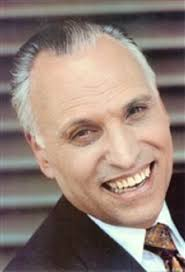 By Sidney Secular
November 13, 2025
You probably didn’t hear a peep about it, but religious freedom in America has largely been restored.
Neither preachers nor the pundits seem to have noticed – or noted – the good news. However, in the November 2025 issue of the newsletter Eagle Forum Report, Anne Schlafly, daughter of the late conservative icon, Phyllis Schlafly provides all the details on this return to judicial sanity.
The story begins in 1971 when, under Nixon, SCOTUS put one over on us, ruling unanimously in Lemon vs. Kurtzman that public monies could not be used in schools run by religious institutions. (Remember, this is the same High Court that two years later ruled that abortion on demand throughout all nine months of pregnancy for any – or no – reason was a “constitutional right!) However, the ruling not only stopped federal monies going to schools run by religious institutions, but it also had the effect of stopping prayer or any other so-called “religious expression” in public schools, such expressions being interpreted as contrary to the “separation of Church and State.” The 3-prong “Lemon Test” of this lemon of a decision stipulated that any action must: [1] have a secular, non-religious purpose; [2] its primary effect must not advance or inhibit religion; and [3] it must not create excessive entanglement between the government and religion. Americans and our nation have reaped the whirlwind of this removal of God from the public square, leaving us to go on for the next 50 years worshiping quite another “god,” that is, the State
In 2022, SCOTUS overturned the Lemon Test from Lemon vs. Kurtzman, in the Kennedy vs. Bremerton School District decision which ruled that religious freedoms had been unconstitutionally restricted by the former finding and that prayer and other “religious” actions can now be practiced in government schools.[*] However, most Americans still believe their freedom to worship is exceptionally limited in public spaces. Kelly Shackelford, JD, of First Liberty, the plaintiff in the Kennedy case, states that the concept of the “separation of church and state is not a phrase found in the Constitution.” The Lemon decision was a total change in the time-tested values of our country. Nature abhors a vacuum, so when God was removed from the public square, a very different morality rushed in to fill the void. [*There can well be some question as to whether this “change of heart” regarding open displays of religious expression might not have been prompted or at least bolstered by the increasing number of Muslims in America, a “faith” that demands public prayer five times a day and not to be limited to mosques! As the Muslim population – and its political and economic power – increases, more and more effort is made to accommodate the tenets of this “religion.”]
The First Amendment established five “individual freedoms,” the first one of which is religion or religious belief and expression. Americans have never been cowardly or embarrassed by their religious affiliation and, indeed, a firm religious faith was considered necessary in any person seeking especially political power (remember, John F. Kennedy was our nation’s first Catholic President!) It is interesting to know that from the very beginning of the nation – even as we were still colonies under Great Britain, God was central to our lives.
It was Washington, our first President, who established the concept of a chosen day of Thanksgiving for our “blessings” as a nation and therefore, Americans should be neither cowardly nor embarrassed over public displays of faith. Yet, as we moved through the Twentieth and on into the Twenty-first century, in the name of “tolerance” Americans have allowed faith in God to be “acceptable,” even permitted only inside a building erected for that purpose – a church or a temple. Public displays of religious expression have been seen as “exclusionary” and “intolerant” of the faith of others. Yet, for our national preservation, Americans must be willing to both personally display and teach our faith to our children.
Some of the multitude of religious rulings affected under the Kennedy case include the following:
1. A public school district cannot be hostile towards religious beliefs.
2. Students can speak about their faith though their teachers must remain neutral; that is, members of the district cannot express or promote their own religious beliefs among the student body.
3. Schools cannot treat religious activities differently than other non-classroom activities.
4. Students can pray during lunch, recess, or other designated free time.
5. Students can read the Bible or other religious material at school.
6. Students can share their faith with fellow students.
7. Schools can acknowledge religion when teaching various subjects. (Nowhere is this more relevant than in the early history of the founding of this nation as most colonies were actually founded as the result of religious persecution in Britain and Europe.)
8. Students can pray, either individually or as a group, at school athletic competitions, student assemblies, or other extracurricular activities when school officials are not involved.
9. Students can pray at graduation ceremonies or include religious content in their speeches.
10. Public schools can actually refer to “Christmas” again and have a “Christmas party” if the intent is not specifically to designed to promote any particular religious denomination. And yes, a public school can display Christmas decorations such as a Nativity scene.
11. Students can give out Christmas gifts with religious messages at school parties.
12. Students can incorporate their faith or religion in classroom and homework assignments under appropriate circumstances as, for instance, addressing the founding of American colonies that were directly religious in nature (the Pilgrims).
13. Teachers and public-school employees can discuss religion with students under many conditions.
14. Public schools or teachers cannot limit religious speech unless they limit other speech under appropriate circumstances.
15. Students can have religious clubs at their schools.
16. Religious student groups such as Young Life can meet on campus as do other non-curricular clubs.
17. Religious clubs can utilize the same school resources available to secular clubs (e.g., school facilities, bulletin boards, public address systems) to promote and facilitate club events.
18. Teachers or public-school employees may attend religious clubs’ activities in a supervisory role.
19. Churches can rent public school facilities for worship services.
20. The Ten Commandments can be displayed.
21. Making a joyful noise: Christian music can be played by Christian or secular bands in schools or parks as any other form of music.
End Note: Eagle Forum of Alabama has produced a Religious Liberty Initiative program using two four-minute videos to disseminate this crucial information.
Please visit https://alabamaeagle.org/issues/religious-liberty/ to watch the videos and send them on to everyone you know to educate people about our newly restored rights.
© 2025 Sidney Secular – All Rights Reserved
E-Mail Sidney Secular: Success_Express@yahoo.com