Work is Not Working Out so, Let’s Work on Changing the Nature of Work
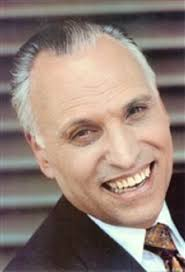 By Sidney Secular
January 23, 2026
Of the many Americans who work and are burnt out, actually half are full time workers. Of these, 76% struggle with a work-life imbalance, 20% describe their workplace as toxic, 40% battle various addictive tendencies while fewer than 8% take advantage of available employee assistance programs designed to help them cope with their situations. Many people mark time to retirement like inmates marking days on a cell wall, comparing notes with each other on how long they will have to endure their situations until they can feel free again. Traditional responses such as more benefits and supportive workshops aren’t fixing the problem.
Meanwhile, drugs such as anti-depressants treat symptoms but not the underlying causes. The general world of work as it presently exists drains people’s energies and so-called solutions simply serve to mask the problems involved. Unless the “worker” is lucky to occupy a special niche or offer a truly unique product or service, the nature of competitive capitalism tends to demand constant acceleration in terms of bigger targets, faster output, and higher profit margins. Work may also tend to be tedious and depending upon the situation, often involves considerable tension. In a high paying position, in each quarter the employee must outperform the last, and the employer gives no quarter until that happens, even when the employee’s physiology can’t sustain the stress involved.
At the turn of this century, mental health issues were already costing the economy billions in lost productivity and healthcare expenses. Now, two decades later, the cost is in the trillions. When the pace never slows, peace never comes and escapism becomes survival. As a result, people seek relief in “comfort” – food, alcohol, gambling, pot, porn, shopping, streaming and scrolling on their devices, a “habit” that presently takes about 7 hours a day for most of those involved. Consumption offers validation or at least gives the satisfaction of having gotten something in return for the stress involved. Credit card debt rises while savings shrink. As more people consume in order to feel better, the more enslaved they become to jobs they hate but can’t afford to leave.
The race for status or money – or both – drains more than wallets, it drains the soul. Mental comparisons breed anxiety and frustration. Burnout becomes ordinary and life’s meaning fades from view. Disengagement runs deep. The industrial age taught us to equate discipline with virtue, productivity with morality, and a lack of both or either with laziness. These beliefs still dominate the working milieu. They feel natural even as they grind us down and the result is a quiet epidemic of resignation. Managers escalate expectations without the necessary tributes that used to arise when such expectations were met.
American society congratulates itself for increased GDP, comparing itself with other industrial nations in that metric instead of a more worthwhile ethic, while mental illness rates soar. People are too busy working to question what’s actually happening. Meanwhile, it’s easy to just vote the same incumbent in every election instead of spending the time to look for someone better often because the accepted belief is that there is nothing better! There’s precious little time for that, anyway. A catchy commercial for a candidate is good enough.
Meanwhile, a weary population is passive, something that the political regime relies on so as to easily roll for some more Somalians. The leaders fear an awakened public that will act if they find out what’s really going on. When the stress becomes chronic, both body and mind pay dearly. People eat poorly, sleep poorly, and move slowly. This combination results in fatigue, brain fog and emotional volatility. Productivity loss from lack of focus and the inability to function clearly far outweighs absenteeism. Escapism feeds corporate profits. Entire industries thrive on the promise and premise that one more purchase will restore a sense of control or satisfaction, but the feeling is both false and fleeting.
It is possible to break this cycle of vicious circles. The first step is to become aware that the system is broken and those involved in it are also broken for being part of it. Many especially older people sense this but don’t voice it, fearing a negative response from employers and uninformed judgements from the masses. This silence only reinforces the status quo. The antidote to all of this is fearless critical thinking and the willingness to engage in conversations over it. We need to question the assumption that work should consume most of our waking hours, that exhaustion equals dedication and that endless growth is the only measure of human progress. People must talk about this at home, at work if feasible and in public forums. Those able to do so must write about it.
We must refuse to normalize the suffering of those whose lives have become a mental prison with neither hope nor cure. The more people become aware of the problem, and call it out, the harder it becomes to ignore it. Change usually starts with one voice and grows to be many. Building a community dedicated to the problem turns awareness into action and solidarity into strength. Shifts happen at a certain point when people no longer whisper about burnout but start demanding a healthier life model out loud. Individuals must recognize this is how changes occur. Every decision to set a boundary, question a norm, or to choose meaning over status chips away at the acceptance of this is “just how it is.”
Furthermore, financial freedom can foster mental freedom. Accumulation of six months or more of savings could give you the power and confidence to walk away from a toxic job and start something new. You could explore entrepreneurship which would turn your value, skills and passions into something of your own making and create work that serves life instead of life serving work. This mental health crisis will be solved only when we find work to honor human potential and limits and create a balance between the energies we expend in earning and living, production and rest and between surviving, striving, and thriving.
If we want healthy minds, we must fix the environment to permit that situation; that is, the environment in which a health mind can exist. And, finally, we must stop pretending that the system is fine. Once we do that, we then must do whatever is necessary not only to live but to thrive. This is best accomplished by doing what you love to do.
© 2026 Sidney Secular – All Rights Reserved
E-Mail Sidney Secular: Success_Express@yahoo.com