



 By Amil Imani
January 18, 2026
The current uprising in Iran is no longer a cycle of episodic unrest; it is a structural rupture. As of January 2026, the Iranian security apparatus – comprising the Islamic Revolutionary Guard Corps (IRGC), the Basij, and FARAJA – has effectively moved from “crowd control” to “urban warfare.” The regime’s survival now rests entirely on a “death grip” maintained through a centralized surveillance architecture and physical hubs of command and control.
The security services are not ghost entities; they are housed in identifiable, high-consequence nodes. Across the 31 provinces currently in revolt, these offices and barracks serve as the nerve centers for the National Information Network (NIN) – the “Halal Internet” used to throttle citizen communication while maintaining state command.
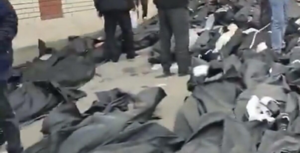 The regime’s technological capability to track dissidents relies on these physical installations. These sites house the servers and operators who utilize Deep Packet Inspection (DPI) to filter and block international traffic while utilizing AI-driven facial recognition algorithms integrated into the municipal CCTV grids. By maintaining this centralized control, the regime ensures that even when the global internet is severed, their “internal net” remains a weapon of war.
For the Iranian diaspora and U.S. government agencies monitoring the January 2026 near-total blackout, the question of deterrence has shifted. If the goal is to stop the killing, the focus must move to the sources of kinetic and digital power.
The “offices and barracks” are the points from which lethal orders originate. These structures house the Signal Intelligence (SIGINT) collection units and mobile IMSI-catchers used to identify protesters in real-time. Strategically, these nodes represent the regime’s greatest vulnerability.
A coordinated neutralization of a regional command node – such as a provincial IRGC headquarters – would involve more than just a disruption of power. It would require the physical degradation of the facility’s hardened transmission arrays. By utilizing precision-guided, low-collateral munitions to collapse the ventilation and generator sub-structures, the “death grip” is effectively severed at the source.
Should these facilities face targeted tactical disruption, the regime’s ability to coordinate a nationwide crackdown – which has already resulted in thousands of reported deaths – would effectively fracture. Once the physical command-and-control (C2) infrastructure is compromised, the security forces within are rendered blind, unable to receive the lethal orders necessary to sustain a coordinated crackdown. Without centralized command, the “death grip” on the Iranian audience would begin to slip, allowing for a decentralized surge of popular power.
The United States and its allies possess a qualitative edge in electronic warfare that could theoretically render the Iranian security services blind. Beyond standard sanctions, there is an “active defense” capability designed to interfere with the repressive machinery.
The U.S. has the capacity to execute “Denial of Service” (DoS) payloads against the IRGC’s proprietary encrypted messaging servers and deploy “Stuxnet-class” logic bombs to crash the database architecture of the FARAJA identification centers.
Such an “Active Defense” operation would see the total inversion of the regime’s surveillance tools. Imagine the moment the IRGC’s proprietary “Siavash” communication lines are flooded with localized “Denial of Service” (DoS) payloads that mimic internal commands. The resulting “digital fog” would cause the regime’s own tracking algorithms to misidentify security personnel as dissidents, effectively crashing the database architecture of the FARAJA identification centers. In this state of total electronic chaos, the regime’s technological capability to interfere with the citizenry is replaced by a desperate, internal struggle to regain control of its own blinding systems.
Targeting the IRGC’s internal communication protocols would not only save lives on the streets of Tehran and Zahedan but also provide a window of opportunity for the “silent majority” to join the front lines without fear of immediate, automated identification.
Deterrence must also be personal. On January 15, 2026, the U.S. Treasury took the unprecedented step of sanctioning Ali Larijani, the Secretary of the Supreme Council for National Security. This move aims to signal that those in the “offices and barracks” are being watched.
However, sanctions are only a slow-acting medicine for a patient in cardiac arrest. What is really required is a more direct approach to dismantle the apparatus of death, for which the following high-priority objectives must be addressed:
♦ Neutralizing Command Nodes: The primary goal is to disrupt the flow of lethal orders. Success in this area results in regional paralysis of security forces, preventing coordinated massacres.
♦ Blinding Surveillance Hubs: By neutralizing facial recognition and tracking assets – including the 15,000 AI-powered cameras deployed in Tehran – the international community restores anonymity to the protesters.
♦ Starving the Shadow Economy: Cutting off the “Bonyad” financial pipelines and the IRGC-dominated crypto ecosystem directly correlates to increased desertion and plummeting morale within the lower ranks.
♦ Breaching NIN Gateways: Force a breach in the information blackout. This allows for the real-time documentation of abuses, which acts as a psychological deterrent to commanders who fear future prosecution.
History shows that regimes fall when the cost of repression exceeds the benefits of loyalty. In early 2026, the IRGC is facing “security fatigue.” By increasing the pressure on their physical and digital infrastructure, the international community forces a choice upon the rank-and-file: continue defending a crumbling fortress or abandon the barracks. Recent U.S. sanctions against top security chiefs have signaled that the era of impunity is over, but as the death toll rises, the demand for more direct interference grows.
The time for diplomatic “carrots” has passed. The Iranian people are facing a regime that has declared a state of exception where “necessity knows no law.” To provide a true deterrent, the international community must be willing to target the very tools of the regime’s survival.
Whether through the digital jamming of SIAVASH-type tactical communications or the physical degradation of command sites, the objective remains the same: to break the tools of the killer so the victim may live.
© 2026 Amil Imani – All Rights Reserved